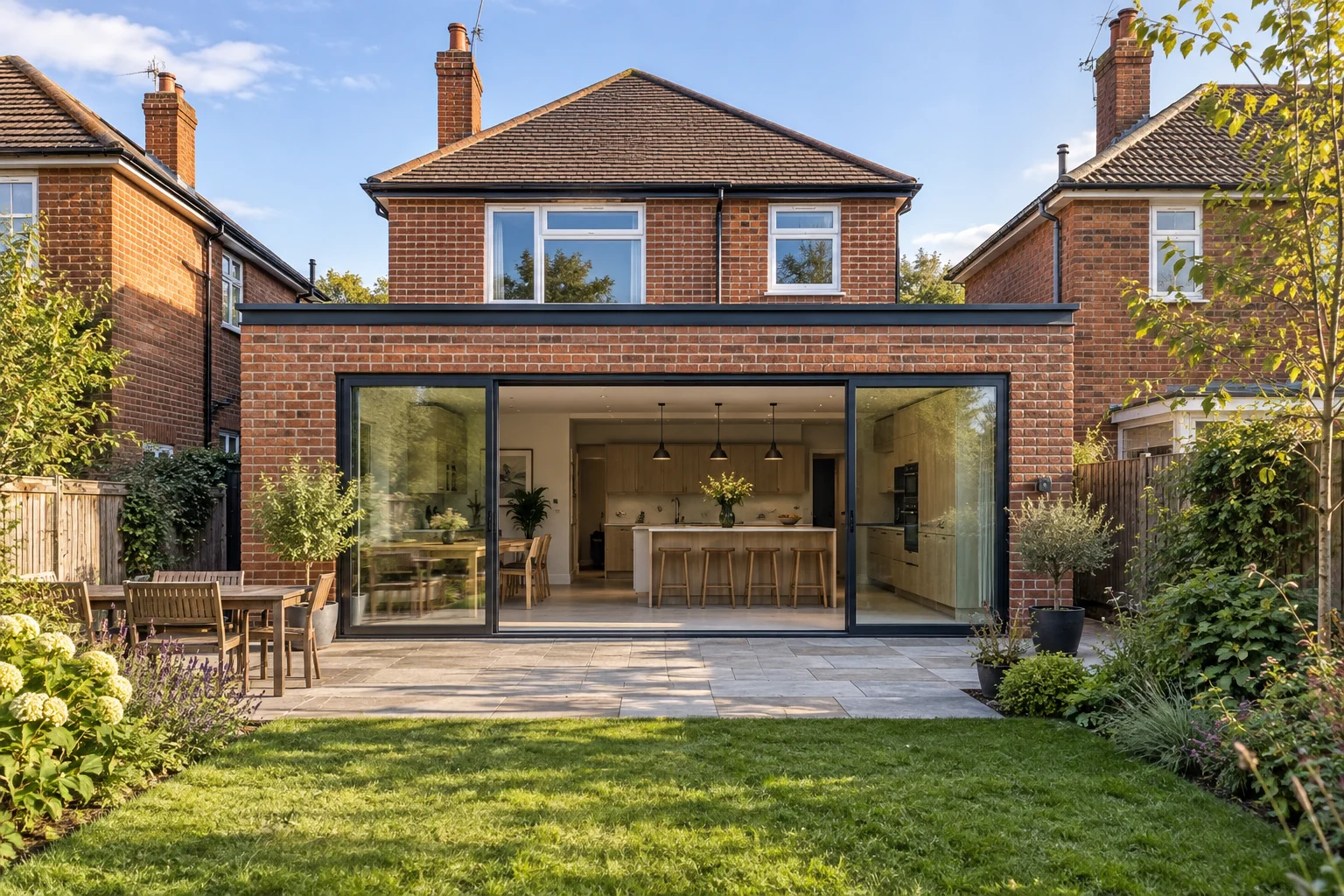
Architectural concept · not a completed company project
NOTTINGHAM · STRUCTURAL ALTERATIONS
Structural alterations for a better Nottingham home layout
Create a better connection between rooms with a properly assessed structural proposal. Bring your desired layout and existing professional information to a discussion about the complete alteration package.
Prefer to send your project details?OUR PROCESS
How your home project
takes shape
Start with a conversation. Agree the scope, responsibilities and timing before the next stage begins.
Talk through your project01. Consultation
Share your postcode, priorities, photographs and any drawings.
02. Design & scope
Discuss the layout, specification and information needed to price the work.
03. Build planning
Agree the construction package, appointment terms and programme.
04. Completion
Review the agreed work, outstanding items and relevant handover records.
YOUR QUESTIONS
Frequently asked questions
From the first conversation to the agreed building work, here are some useful things to know.
Ask us on WhatsAppWhat counts as a structural alteration?
Changes affecting the way a building carries loads need appropriate assessment and design. Examples may include enlarging openings or changing supporting elements. A wall’s appearance or a neighbour’s similar project cannot establish the structural role of the element in your house.
Can you tell from a photograph whether a wall is load-bearing?
A photograph can help explain the enquiry but cannot establish the complete load path or hidden construction. Provide existing drawings and any engineering reports. The relevant professional assessment should determine what information and inspection are needed before a removal or opening is designed.
What should I arrange before asking for wall-removal pricing?
Describe the opening and provide current plans, structural design and specification where available. If that information does not exist, say so. A construction quotation needs a defined basis, including support, temporary works, services and making good around the affected area.
Who designs the beam or other permanent support?
Confirm the appropriately appointed structural designer and their deliverables. Ask who coordinates the structural information with the architectural layout and answers site queries. Do not assume a building quotation automatically includes the calculations and professional responsibilities required for the proposed alteration.
Why does the structure below an opening matter?
Loads from a new support must be carried through the building to suitable bearing arrangements. The visible opening is only part of that question. The designer should assess the relevant load path and any investigations needed; the website cannot specify a beam or foundation.
Are temporary supports included with permanent structural work?
Ask explicitly how temporary works are designed, planned and provided for the actual alteration. They are a separate construction consideration from the finished beam or opening. Responsibilities and costs should be clear before work begins, with suitable professional input where required.
More project questions 14 answers
Can electrical cables or pipework affect wall alterations?
Existing services may pass through or near the proposed work and need investigation and coordination. Include isolation, diversion, reinstatement and testing in the scope discussion. Do not assume structural drawings fully describe the services work or that concealed routes match an old plan.
How much making good should I expect around an opening?
The affected floors, walls, ceilings and adjacent finishes depend on the design and working method. Ask for the intended completion boundary to be described. A beam installation price may not include decoration or matching finishes across the whole room.
Can a structural opening be flush with the ceiling?
That is a design question involving the existing structure and the intended arrangement. Tell the designer the appearance you want, then assess feasibility and consequences. Do not assume a concealed support can replace a visible downstand without changing other parts of the scheme.
What if previous alterations are undocumented?
Share what you know and any drawings, invoices or reports available. Identify uncertainty rather than treating past work as verified. The structural designer may need further investigation before relying on existing supports or connections as part of the new alteration.
Does internal structural work need approval checks?
Internal work can still require building-regulations approval or other permissions depending on the property and proposal. Confirm the applicable route and inspection arrangements before starting. Planning, building control and adjoining-property matters are distinct questions and should not be treated as interchangeable approvals.
Can the household stay in the room during structural work?
The work zone and safe access arrangements must be planned for the actual alteration. Tell the team about occupancy, essential facilities and vulnerable users. Do not assume the room remains usable while supporting elements, services or temporary works are being altered.
How should a structural quotation describe exclusions?
Look for clear treatment of design, investigations, temporary works, lifting or access equipment, services, inspections and finishes. Identify any provisional items. Comparing only the steel or installation figure can miss a substantial part of the work needed to complete the opening.
What happens if site conditions differ from the structural design?
The affected work needs review with the responsible designer before improvising a change. Record the discovery and obtain the relevant revised instructions. Any scope, price or programme implications should be agreed through the project’s change process.
Can a structural alteration be combined with new glazing?
Coordinate the opening, supports, frame dimensions, installation tolerances and threshold details. Agree when final measurements are taken and who checks the order. A structural opening and a glazing product must be designed to work together; neither specification should be assumed from the other.
What should I retain after structural work is completed?
Keep the relevant drawings, calculations, approved changes and completion or inspection records supplied for the work. Include product and installation information where applicable. Ask for the document list in advance so handover does not depend on reconstructing decisions after the structure is concealed.
Can several openings be made in one project?
Show all proposed changes together so their combined effects can be assessed. Separate openings may share load paths, access or service requirements. Pricing and design should reflect the complete scheme rather than treating each wall as an unrelated small job.
Why can similar-looking openings have different prices?
Existing construction, support arrangements, access, services and finish requirements vary between properties. The design and investigation results determine the scope. Compare quotations for the same actual proposal rather than using the width of the visible opening as the only measure.
Should a structural project start before the kitchen layout is final?
Resolve important interfaces first, including appliance positions, glazing and any support that affects cabinetry or circulation. A late layout change can require redesign or rework. Keep the structural and kitchen documents aligned before authorising construction based on either one.
How do I describe my proposed structural change?
Send the postcode, existing and proposed layouts, photographs and any engineering information. Mark the walls or openings affected and the rooms above and below where known. State the result you want without assuming the technical solution has already been established.
Open up your home with a properly defined structural package
Explain the change in the way you want to live
Talk to Design N Build about structural alterations for a Nottingham home when your proposed layout involves changing walls, openings or other supporting elements. Start with the space you want to create: a kitchen connected to the dining room, a wider opening to an extension or a less fragmented ground floor. The desired room arrangement comes first. Whether a particular wall can be altered, and how the building will be supported, requires appropriate assessment of the actual property.
A photograph of a wall is useful for explaining where you mean, but it is not a structural design. Do not begin removal or exploratory work to prove that a proposal is possible. Send the plans and professional information you already have, identify the element you want to change and say which questions remain unresolved. We can discuss the requested construction package and the information needed to define it. The enquiry should not rely on an assumed beam size or a neighbour's similar-looking alteration.
Decide what the finished opening must achieve
Consider the everyday result as carefully as the width of the opening. Where will people walk? Which furniture, appliances or storage units remain? Does the new connection need doors, or will the rooms always operate together? A wider view between rooms may meet the brief without producing the completely uninterrupted space you first imagined. Discuss these preferences with your designer so the structural proposal is tested against the way the rooms will be used, not just the removal of a line on a plan.
Identify what must be retained around the work. Original joinery, a recently installed kitchen, decorative ceilings or an adjoining occupied room can change the preparation and finishing scope. Tell us whether the visible support would be acceptable or whether a different appearance is an important design objective. Concealing a support is not simply a cosmetic request; its feasibility and consequences need to be considered by the responsible designer. Record the agreed result so quotation comparisons refer to the same intended opening.

Establish what is there before deciding what can change
Gather evidence about earlier alterations
Homes are not always arranged as they were first built. A removed chimney, an altered stair, an older extension or an opening made by a previous owner may affect the current proposal. Share available drawings, calculations, survey observations and completion records relating to relevant previous work. Tell the designer if information is missing. An apparently finished surface does not establish the nature or adequacy of the construction behind it, and an old plan should not be treated as a verified record of every later change.
Describe known symptoms without diagnosing them yourself. If you have noticed movement, recurring cracks or doors becoming difficult to operate, provide the observations and any professional report. Those concerns may require assessment separately from the desired remodelling. Do not assume that installing a new support will resolve an unidentified existing problem. The alteration enquiry should distinguish the layout improvement you want from any condition that needs investigation, so neither is hidden inside the other project's price.
Let the responsible professional define investigations
Some questions can be answered from suitable records and inspection; others may need further investigation. Ask the appointed professional to identify what evidence is required and how it should be obtained. The homeowner's role is to make relevant information available and agree access, not to remove finishes or disturb potentially supporting components without a competent plan. If investigation itself is a separate package, clarify its scope, protection arrangements and the condition in which the affected area will be left.
Uncertainty should remain visible in an early quotation. If a construction allowance depends on a particular existing arrangement, record that assumption and the point at which it will be checked. This is more useful than treating an unknown as a confirmed fact. Once the required evidence is available, the design and price can be reviewed on a firmer basis. Ask which decisions can be made now and which genuinely depend on information that has not yet been established.
Connect the engineer's design with the room layout
Confirm the appointed designer and current information
Identify who is responsible for the structural design, what they have been asked to deliver and who will answer construction queries. A builder's proposal should state any design-related scope it includes rather than leave that responsibility implied. If you have already appointed an engineer or architectural designer, share the relevant details and current documents. The construction package needs coordinated information; several individually plausible drawings can still conflict if they describe different versions of the room arrangement.
Check that the architectural plan and structural information refer to the same openings, positions and levels. If a kitchen designer has moved cabinetry or a glazing supplier has changed an opening requirement, make those decisions visible to the responsible design team. A structural element can affect clear dimensions, room proportions and finishing details. Resolving those relationships on the current documents is preferable to discovering them when a fitted product no longer has the space its supplier expected.
Follow the support question beyond the visible wall
The finished opening is only the part of the proposal you will see. The structural designer must consider how loads are carried through the building and the suitability of the associated support arrangements. As a client, ask whether the supplied design addresses the relevant structure around, above and below the work. Do not use a website or a quotation description to select an engineering solution. Beam dimensions, bearings, connections and supporting construction require project-specific professional decisions.
If a design note requests a site check or further information, identify who will respond and when. Those notes are not decorative text to be ignored during procurement. A conditional design should not quietly become an unconditional construction instruction. Keep revised information together with the original query so the site team can establish which detail applies. Design N Build can discuss building the agreed alteration; the responsibility for resolving a structural question must remain with the appropriately appointed professional.
Include temporary works in the project conversation
Treat the construction stage as a separate requirement
The completed building and the building during alteration are different conditions. Temporary support and the sequence of work need to be planned for the actual circumstances by competent people. Ask how those responsibilities are covered in the proposal and which specialist input is required. Do not assume that a permanent support drawing is also a complete temporary-works plan. This page does not provide a method for supporting or removing a wall, because a generic method would not account for your building.
Temporary arrangements can affect access, occupied rooms and the space available for working. Explain how the household currently moves through the area and whether there are essential facilities nearby. The team can then consider the relevant restrictions as part of the work plan. A homeowner should not move, adjust or remove temporary supports or enter a controlled work area. Agree a communication route for questions about access so household convenience does not lead to an improvised change in working arrangements.
Price the conditions needed to carry out the work
An estimate for a permanent steel or other component is not the price of a completed structural alteration. Ask how investigation, preparation, temporary works, access equipment, handling, installation, inspections and reinstatement are treated. Some costs depend on the actual design or site conditions and should be identified as such. A quotation that names these boundaries helps you compare proposals without assuming that every necessary activity is included because the visible finished support has been priced.
Discuss how the building will be protected during the agreed operations and what access the contractor requires. If the proposed work sits beside newly finished surfaces or client possessions, make that clear during scope development. Protection must be suitable for the actual activity, and some items may need to be removed from the area rather than covered in place. Record what preparation the household is expected to complete before attendance and who will confirm that the work area is ready.
Coordinate the hidden services inside altered walls
Identify known routes without assuming they are complete
Walls and floors can contain electrical, water, heating or other service routes that are not shown on a room plan. Provide records where you have them and explain the location of fittings near the proposed opening. The relevant trades need to assess the effect of the alteration on those services. Do not assume that the absence of a socket proves the absence of a cable, or that a visible pipe explains every concealed connection. Investigation and safe working arrangements belong with competent professionals.
Include services coordination in the quotation conversation even where the structural work is the main reason for the project. Moving a switch, diverting pipework or changing an adjoining radiator can affect finishes beyond the wall being altered. Establish who is responsible for the necessary work and the relevant checks or records. A structural drawing may not describe these tasks. If another contractor will undertake them, agree the interface and timing so the building team is not left waiting for an unarranged appointment.
Resolve new service positions alongside the layout
Opening two rooms into one can change how sockets, lighting controls and heating emitters serve the space. Think about the future furniture and kitchen positions before agreeing the final locations. A switch that worked beside a former doorway may no longer make sense once the room is open. Explain the intended daily use to the relevant designer or trade so the service arrangement follows the new layout. Avoid making isolated late choices that conflict with cabinetry or a planned feature wall.
Ask how disturbances caused by service work will be finished. A pipe diversion through an adjoining room may create a separate making-good task from the plasterwork around the new opening. The quotation should describe that boundary. Where you are retaining existing decoration, discuss the practical limits of local repairs and the result you want to achieve. Matching an old finish cannot simply be assumed, particularly when age, materials or previous work make an exact match uncertain.
Plan open spaces around sound, privacy and daily routines
Test the connected rooms before committing to the opening
An open-plan arrangement changes relationships between activities. Cooking, television, homework and calls may take place in the same connected space after the wall is altered. Sketch where these activities will happen and consider whether some separation is still useful. The best brief is not always the largest possible opening. A defined dining connection or a flexible doorway may suit a household better than removing every visual boundary. Discuss alternatives with your designer before the structural scheme is treated as settled.
Think about storage and usable wall space as well as floor area. A wall you remove may currently hold tall furniture, kitchen units or a radiator. Those functions need a place in the revised arrangement. Mark furniture at realistic dimensions on the proposed plan and allow for opening doors and movement between uses. If the room depends on bespoke storage, include its requirements early. A generous-looking plan can feel less useful if all the retained walls become circulation routes or glazed openings.
Bring the relevant building requirements into the design
Changes to the arrangement of rooms can have implications beyond structure. Ask the appointed design team to consider the applicable building requirements and how the complete proposal meets them. Fire safety, ventilation and other matters must be addressed through project-specific professional advice. Do not assume that a neighbour's open-plan layout demonstrates compliance for your home. The age, arrangement and work history of the buildings may differ, and a photograph does not explain the approved design or its conditions.
Keep the intended doors, partitions and room uses consistent across the information used for pricing and approval. If you later decide to remove a door or change a room's function, check the implications before treating it as a minor finishing change. Design N Build can discuss the construction scope for the agreed layout; the design process should determine what that layout requires. This keeps a commercially attractive open space connected to the practical and regulatory questions that make it suitable for your household.
Official reference: GOV.UK: building regulations approval
Join structural openings to glazing and extensions
Agree the measured opening and the finished appearance
A new external opening or a connection to an extension often involves more than one supplier. The structural design, frame specification and surrounding finishes must describe compatible dimensions and details. Establish who takes measurements, at which stage they are confirmed and who authorises manufacture. An early architectural dimension is not automatically an order dimension. Ask how tolerances and installation requirements are resolved by the responsible parties, rather than choosing one supplier's assumptions without checking the adjoining work.
Discuss the visible result around the opening: sides, head, threshold, adjacent floor and any support that remains apparent. These details influence how the old and new spaces read together. If you expect continuous flooring, explain that before the scope is agreed. Different existing levels or floor constructions may require design and preparation beyond removing a wall. A glazing brochure will not define that building work, and a structural quotation will not necessarily include every finish shown in an interior image.
Avoid ordering around a design that is still changing
A manufactured frame or fitted kitchen may be difficult to alter after release. Identify the design decisions that must be fixed before such orders are placed. If the structural arrangement changes, make sure the affected supplier is informed through the agreed coordination process. Do not let a product delivery date become the reason unresolved dimensions are accepted without checking. The programme should recognise the sequence from confirmed design to verified order information and installation readiness.
Where an extension and an internal alteration are being procured together, clarify the boundary between the new structure and work inside the existing house. The existing rooms may require service changes, floor repairs, plastering or decoration that are not obvious on a drawing of the new footprint. Include those areas in the scope schedule. If the work is being split into separate contracts, appoint someone to coordinate the junction and agree which contractor leaves the opening at each stage of completion.
Define making good before comparing structural quotations
Name every affected surface
A finished opening normally meets several surfaces: walls, ceilings, floors, joinery and sometimes adjoining fitted furniture. Identify the condition expected for each at the end of the package. There is a substantial difference between structural installation only, surfaces ready for a decorator and a fully redecorated room. Ask for that distinction to be written down. The phrase make good should not carry the entire finishing specification when different people may interpret it differently.
Consider the extent of a repair, not only its material. A local plaster patch and a broader ceiling finish are different scopes. A replacement strip of flooring and a continuous new floor across connected rooms produce different results. Explain whether you plan to finish the room yourself or appoint another trade. The builder then needs to know the preparation boundary, while you need to understand which costs remain outside the structural quotation. This avoids comparing a partially finished opening with a complete room as though they were identical purchases.
Discuss retained features and realistic matching
If cornices, skirtings, doors or decorative finishes are important to retain, identify them before work is priced. Provide photographs that show how they meet the proposed alteration. Ask whether specialist input or additional investigation is needed to understand the options. Do not assume that an old profile or finish remains readily available. The agreed scope should distinguish careful retention, local repair, replacement and a changed design, because those outcomes involve different work and different expectations.
Record how discoveries will be handled when finishes are opened. Existing conditions may differ from what could be seen during an initial visit. The relevant designer or trade should review the issue before a substitute detail is adopted. If a discovery changes the finishing extent, ask for that change to be described alongside any price and sequence implications. A clear variation record helps keep the promised final appearance connected to the actual work, rather than allowing small unrecorded adjustments to accumulate.
Arrange work around an occupied Nottingham home
Explain the routes the household cannot lose
Tell Design N Build which entrances, stairs, bathrooms or living areas are needed during the proposed work. Mention children, pets, working-from-home needs and any access requirements that affect the household. The contractor must assess whether a suitable arrangement is possible for the actual alteration. Remaining in the property should not be assumed to mean unrestricted use of the affected room. Some stages may require a different temporary arrangement, to be discussed before a construction commitment is made.
Look at the route between the street and the work area as well as the wall itself. Materials, equipment and waste have to move through that route. Explain shared passages, narrow entrances, steps and items that cannot easily be moved. Photographs can help the initial discussion, but suitable logistics require an assessment of the actual site. Never arrange access over someone else's property simply because it appears convenient. Necessary permissions and practical arrangements should be established through the proper parties.
Agree communication during the disruptive stages
Ask how you will be informed about planned restrictions or interruptions that affect normal use of the home. A useful arrangement identifies the contact person and the decisions you may need to make promptly. If access arrangements change, raise the issue through that route instead of adjusting protection or entering the work zone yourself. The same applies to visitors and deliveries: household appointments should be coordinated with the agreed site arrangements while the relevant areas are under construction.
Prepare the household's belongings according to the agreed plan. Valuable or sensitive items near the work may be better removed to a suitable location than left for improvised protection. Keep essential possessions accessible without entering restricted space. Discuss waste handling and cleaning boundaries so you understand the distinction between site housekeeping and a complete post-project household clean. These are practical quotation details, not minor inconveniences to resolve after the structural work has already started.
Compare prices on the complete alteration
Ask what information supports each quotation
Supply the same current structural and layout information when seeking comparable construction prices. State whether investigations, approvals or supplier details are still outstanding. Each quotation should identify the documents and assumptions it uses. A figure based on a fully resolved design cannot fairly be compared with one based on an assumed opening and a provisional support. Ask questions about the difference before choosing a contractor on the apparent saving.
Review the treatment of design-related work, temporary arrangements, permanent installation, services, access, inspections, waste and finishes. Confirm how client-supplied items and separate trades affect the scope. Ask whether VAT is included in the figures supplied and identify provisional sums or other allowances clearly. The objective is not to force every contractor into the same document format. It is to establish whether their proposals describe the same construction result and where uncertainty remains.
Judge an allowance by its stated basis
An allowance can be appropriate when a defined question remains unresolved, but it should not hide a missing decision. Ask what the allowance covers, what evidence supports it and what would cause it to change. If a further survey or design issue must be resolved before the price can be firmed up, identify that step. Keep optional finish upgrades separate from uncertainty about essential construction work. They are different reasons why the eventual cost might differ from an initial discussion.
When a proposal exceeds your budget, return to the desired room outcome with the design team. A narrower or differently arranged opening may involve a different scope, but it still needs proper assessment. Do not seek savings by omitting necessary temporary works, professional design or relevant checks. A coherent change in the brief is more useful than an apparently cheaper package that leaves essential responsibilities unassigned. Design N Build can review the construction implications of an appropriately revised proposal.
Handle discoveries and changes through the right people
Stop assumptions from becoming improvised instructions
If exposed construction differs from the design assumptions, the affected question must be referred to the responsible professional. The discovery may be straightforward to resolve or may require revised information. Either way, the response should be documented before relying on it. A homeowner should not decide an alternative support arrangement based on what seems similar, and a casual conversation should not replace an instruction from the person responsible for the design.
Ask how such queries will be recorded and communicated between the site team, designer and client. Useful records connect the observation with photographs or dimensions obtained safely, the designer's response and any updated drawing. Where the answer changes the agreed work, the commercial implications should also be addressed. This creates a traceable decision rather than leaving future readers to guess why the built arrangement differs from the first document in the file.
Keep late room changes connected to structural decisions
Once a structural layout is designed, a change to the desired room can have consequences beyond moving furniture. A wider opening, different door position or altered kitchen arrangement may require a review of supports and associated details. Raise the proposed change before instructing any trade to act on it. Ask the responsible designer and contractor what it affects, including work already undertaken and products already ordered. A change is not necessarily impossible, but it needs an informed decision.
Retain the agreed superseded and replacement information in a way that makes the current instruction unmistakable. The active work pack should not contain conflicting drawings without explanation. Confirm who may approve the cost and who may authorise the revised work to proceed. This is especially helpful where several household members or advisers are involved. Clear decisions protect the intended result and reduce the risk of a late preference being implemented differently by different people.
Finish with an opening and records you understand
Review the agreed completion boundary
At handover, compare the work with the actual package: structure, associated services, surrounding finishes and any separate client work. Record outstanding items specifically, including who will address them and how arrangements will be confirmed. If decoration was excluded, that should already be clear from the quotation rather than emerge as a surprise. If another supplier is due to install into the opening, confirm the agreed condition in which the area is being transferred to them.
Request the relevant design, revision, inspection and completion information for the works. The documents required depend on the project and applicable process, so establish the list with the responsible parties. Keep it with your property records. A future alteration or sale may prompt questions about what changed; a clear record is more useful than a folder of unlabeled photographs. Do not treat the absence of visible problems as a substitute for the professional checks or records applicable to the work.
Start with the building, the opening and the desired finish
For a structural alteration enquiry, send the postcode, a marked plan or clear explanation of the affected rooms, safe photographs and the professional documents already available. State whether the room connects to an extension, kitchen or new glazing package. Explain which surfaces and features you want to retain and the finish you expect when the contractor leaves. These details distinguish a properly described alteration from a request for the price of a beam alone.
Call or WhatsApp Design N Build to discuss residential structural work in Nottingham and surrounding communities. Tell us when the proposal is still at the feasibility stage so the next conversation can focus on the information needed. If the design is ready for pricing, provide the complete current set and its revision. The aim is a defined construction package that connects professional design, a workable site arrangement and the room your household intends to use.
Agree what happens when opening-up changes the structural brief
Purchase an investigation with a defined purpose
An investigation before structural alteration should identify the questions it is intended to answer. These might concern the existing construction, a support position or a service conflict relevant to the engineer’s proposal. Agree the responsible professional’s information needs and the scope of access required. The contractor’s task should be defined with appropriate assessment and method responsibilities. Do not treat general opening-up as permission to remove structural elements at will. The appointment needs to explain what evidence is being sought and who interprets it before further construction instructions are issued.
Clarify what will be reinstated after investigation and what remains open for subsequent work. A homeowner needs to understand whether finishes, access or room use are affected between appointments. Identify any temporary condition that needs assessment, protection or a further instruction. Keep the investigation output with the professional review it informs. Photos of exposed construction may be useful evidence but do not, on their own, constitute an accepted structural design. The purchasing boundary should make the information-gathering task and subsequent technical decision distinct.
Control revised instructions at the existing building
If the exposed condition differs from an assumption in the design, establish who must review it before the affected work continues. Record the observation, the current instruction and the information needed for a revised decision. A contractor should not be expected to resolve a structural design question through an informal variation description. The responsible professional needs to provide the appropriate assessment and instruction. The client’s change process can then address scope, price and programme effects on a basis that the construction team can actually follow.
A revised opening or support detail can influence finishes and room geometry as well as the primary structural work. Review connected items such as door positions, kitchen furniture and services against the revised information. Distinguish a consequence of the accepted design change from a newly requested improvement. Keep the active drawing revision available to the team, with superseded information retained as a record. This helps the homeowner see what they are approving and avoids asking several suppliers to proceed from different versions of the same opening.
Set the reporting and approval route before site investigation begins, especially if the homeowner cannot attend each day. Identify who receives findings, who seeks professional review and who authorises the commercial change. If a decision is delayed, discuss its implications through the agreed project process rather than assuming that construction can simply continue around it. A structural-alteration commission benefits from this preparation because much of its value lies in executing an assessed change within an existing building, whose concealed conditions may need evidence before the final scope can be confirmed.
LET’S TALK ABOUT YOUR HOME
Ready to improve your home?
Let’s talk.
Call us for an initial conversation, or send your postcode, photos and drawings on WhatsApp. We’ll help you work out the next step.